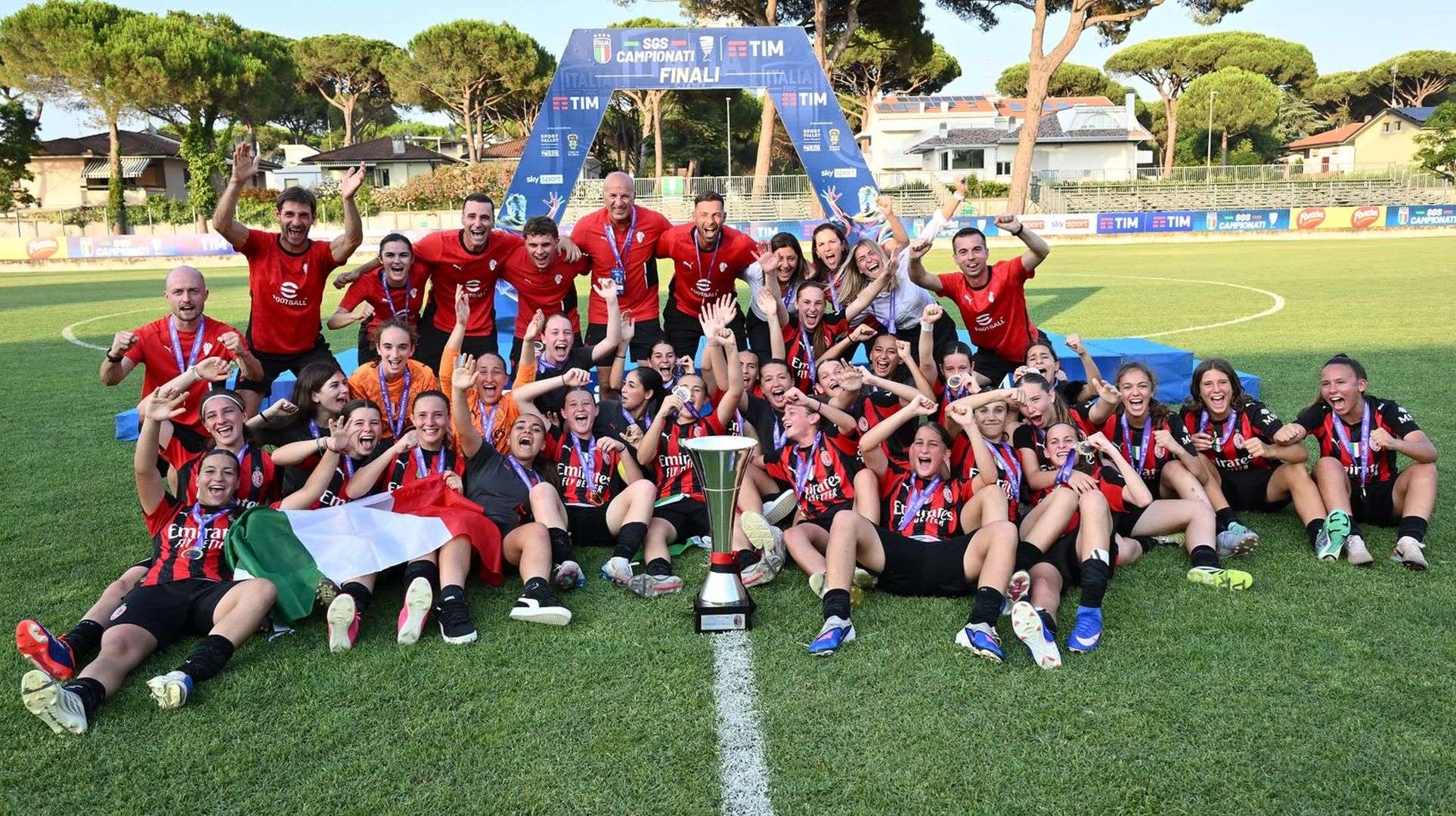
AC Milan has become the first Italian club to enter female youth teams into a professional men's league, marking a watershed moment for women's football development in Serie A. The Rossoneri will field two age groups—Under-17s and Under-15s—competing against male counterparts in an unprecedented competitive structure designed to accelerate player progression.
The initiative pairs Milan's U-17 squad against boys' Under-14 teams, while the U-15s face Under-13 opposition. This unconventional pathway reflects the club's strategic vision: exposing young female talent to the physicality, tempo, and tactical demands of elite male competition serves as a crucible for rapid development. By testing themselves in a professional league environment rather than isolated women's circuits, Milan's prospects gain measurable advantages in spatial awareness, decision-making under pressure, and physical conditioning.
Breaking New Ground in Youth Development
Italian women's football has historically lacked the institutional investment of leading European nations. Milan's decision addresses a systemic gap by creating a high-performance incubator that blurs traditional gender boundaries in youth sport. The move signals confidence that competitive parity at youth level—when managed properly—accelerates individual growth without compromising player welfare. Historical data from mixed-age competitions in other sports shows accelerated technical maturation occurs when younger players regularly face older opponents with superior physical attributes.
The competitive framework serves multiple purposes. Female players develop positional intelligence faster when opponents exploit physical differences, forcing tactical sophistication and technical precision rather than relying on strength. Simultaneously, the professional league setting embeds these athletes within established infrastructure: training facilities, medical staff, coaching continuity, and regular match-day protocols—advantages typically reserved for men's youth academies.
Strategic Implications for Italian Football
Milan's gambit extends beyond individual player development. The Rossoneri are essentially piloting a model that could reshape Italian women's football's talent pipeline. If successful, other Serie A clubs may adopt similar frameworks, creating cascading opportunities. This approach potentially addresses why Italian women's football, despite domestic league quality, has struggled to compete consistently at European level—a gap often attributed to insufficient competitive rigour in developmental phases.
The initiative demonstrates Milan's commitment to systematic excellence across all competitive tiers. By removing artificial ceilings on female player exposure to demanding environments, the club positions itself to develop prospects capable of sustaining long careers in elite women's competitions. The next measure of success arrives through measurable progression metrics: how many participants advance to professional women's teams, and whether their performance trajectories reflect accelerated improvement compared to traditional developmental pathways.