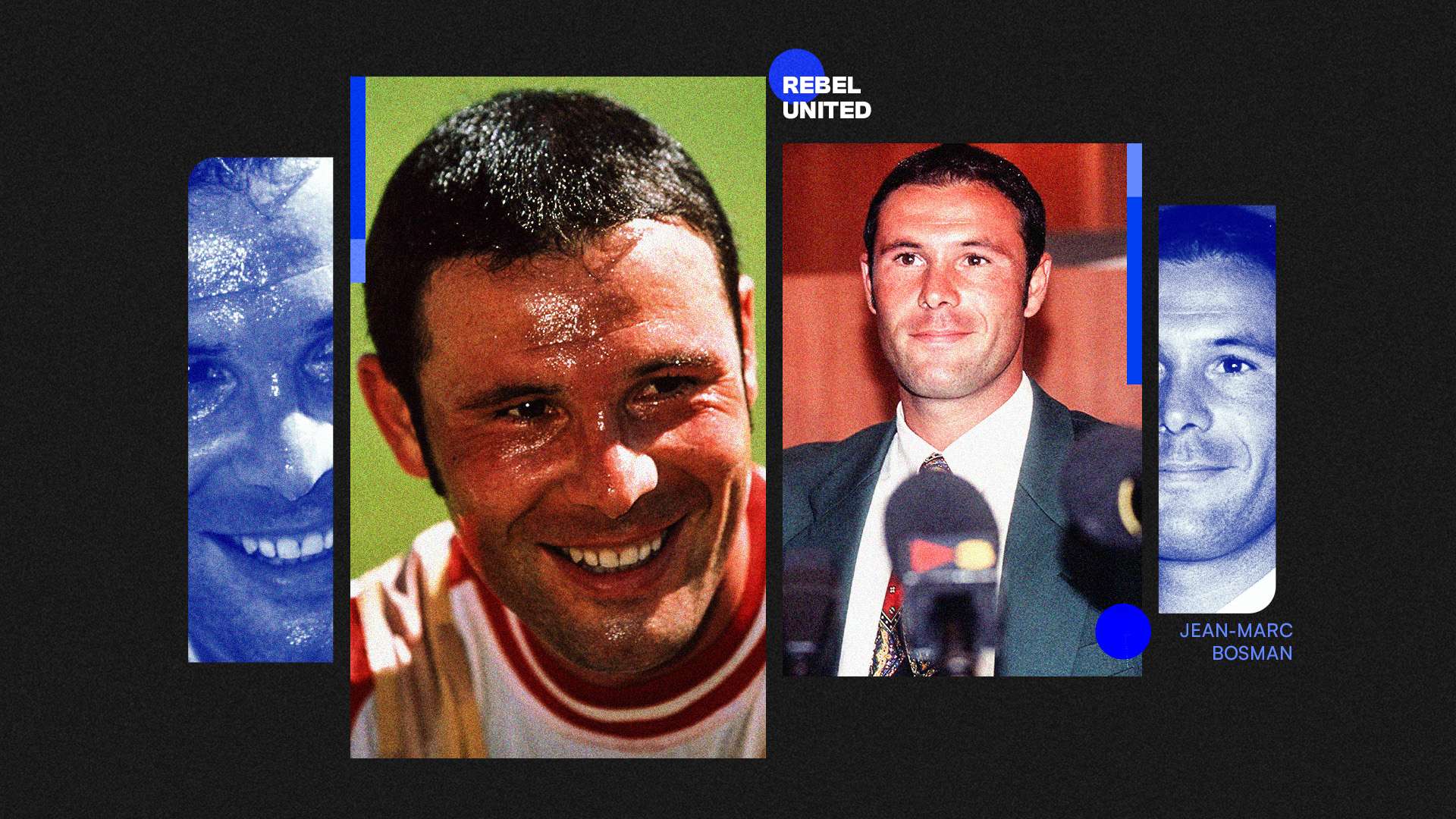
Jean-Marc Bosman never intended to reshape professional football. The Belgian midfielder simply wanted to move clubs after his contract expired in 1990, yet his legal battle against RFC Liège and UEFA created the landmark ruling that transformed the sport forever—while leaving him financially devastated.
In the summer of 1990, Bosman was a 25-year-old attacking midfielder at RFC Liège with modest credentials: just 25 Division 1 appearances across two seasons. When his contract ended, the club offered him roughly 850 euros monthly—a quarter of his previous wage and barely above what a Belgian factory worker earned. Across the border, USL Dunkerque, a French second-division club, presented an attractive alternative. The move made practical sense, yet RFC Liège refused to release him without payment, demanding a transfer fee between 600,000 and 800,000 euros for a player whose contract had expired.
When Dunkerque could not meet the fee, Bosman made a radical choice: he sacrificed his professional status, re-registered as an amateur, and walked away. He drifted between a French fifth-tier club and a top-flight team on Réunion in the Indian Ocean, struggling to maintain his fitness and career prospects. By 1992, living in his parents' garage and rejected for unemployment benefits, his playing future looked grim.
A Legal Victory That Changed Everything
Bosman pursued legal action against RFC Liège and the Belgian Football Association, appealing to Belgian courts and eventually the European Court of Justice. Early rulings had confirmed his right to move freely, yet UEFA resisted fiercely. UEFA President Lennart Johansson warned that the EU was "trying to destroy club football," while FIFA General Secretary Sepp Blatter echoed similar concerns. Football's governing bodies argued that civil courts had no jurisdiction over the sport's internal affairs.
The European Court of Justice disagreed. On 15 December 1995, the Bosman ruling fundamentally rewrote football law, establishing that professional players had the right to free movement within the EU once their contracts expired. This decision:
- Eliminated transfer fees for out-of-contract players across EU borders
- Accelerated player salary growth dramatically across European leagues
- Shifted negotiating power from clubs to players and agents
- Enabled the modern transfer market as we know it today
Bosman had inadvertently enriched every professional footballer who came after him. Yet the sport that benefited most from his sacrifice abandoned him. "They wanted to wipe me out," he reflects bitterly. "I was ignored. But you pay a price when you challenge an established power structure." After his case concluded, Bosman struggled to rebuild his career. His nomadic years abroad had derailed his development, and few clubs wanted to sign a player permanently tainted by his legal rebellion against the system.
The Price of Revolution
Thirty years after reshaping global football, Bosman remains relatively poor while modern players enjoy wages and freedoms his ruling secured. His spiral into alcohol abuse, debt, depression, and domestic violence charges reflects a man whose greatest achievement brought him nothing but hardship. The irony is stark: agents now earn millions negotiating contracts that Bosman's legal victory made possible, yet the man who triggered this seismic shift receives little recognition or financial reward.
Bosman's case demonstrates how structural power imbalances in football persist even after historic legal victories. His story reminds us that not all revolutionaries benefit from the revolutions they spark. As modern footballers enjoy the fruits of free agency and competitive salaries, the question lingers: what happened to the player who made it all possible?