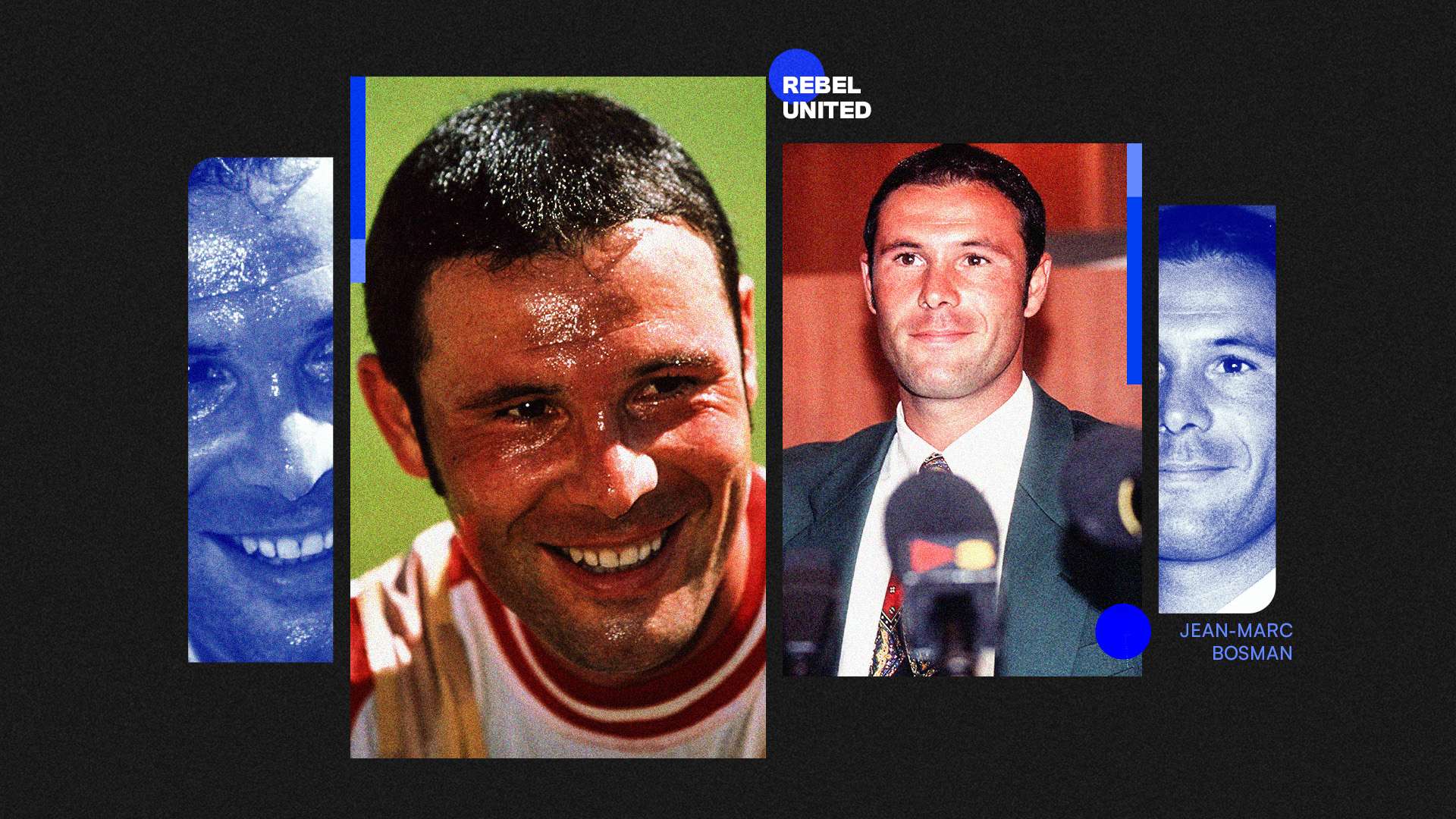
The Bosman ruling of 1995 transformed professional football by granting players freedom of movement across European borders. Yet the Belgian midfielder who fought this landmark legal battle—and won—never profited from his own revolution. Jean-Marc Bosman spent decades in poverty while the sport he reshaped became a multi-billion-pound industry.
In the summer of 1990, Bosman's contract with Belgian club RFC Liège expired. The 25-year-old attacking midfielder had managed only 25 top-division appearances over two seasons and fell out with management. When RFC offered him a new deal at roughly 850 euros per month—a quarter of his previous wage and barely more than a factory worker earned—Bosman seized the chance to leave. French second-tier side USL Dunkerque offered him fresh opportunity just across the border.
The Transfer That Sparked Legal Revolution
RFC Liège refused to release Bosman without a transfer fee of 600,000 to 800,000 euros, despite his contract expiring and their insulting wage offer. Dunkerque could not afford it. The club blocked his departure entirely. Rather than accept this injustice, Bosman took unprecedented action: he gave up his professional status, registered as an amateur, and sued RFC Liège and the Belgian Football Association for damages.
His subsequent years were marked by professional limbo and personal hardship. He played for lower-tier French clubs and a top-flight team on the island of La Réunion, living in his parents' garage upon returning to Belgium. Employment agencies rejected his applications for benefits. Yet Bosman persisted with his legal challenge, referring the case to the European Court of Justice after Belgian courts ruled in his favour but UEFA ignored the decision.
The Ruling That Changed Everything—Except for Bosman
Football authorities warned the ruling would destroy the game:
- UEFA President Lennart Johansson claimed the European Union was trying to destroy club football
- FIFA officials argued national courts had no jurisdiction over the sport
- Clubs feared the commercial implications of lost transfer revenue
The European Court disagreed. In 1995, the Bosman ruling established that professional footballers enjoyed the same freedom of movement as any other worker within the EU. Players could move freely upon contract expiration without transfer fees. This single judgment accelerated player salaries, shifted power dynamics decisively toward athletes, and enabled the modern transfer market.
Yet Bosman himself never reaped these benefits. Clubs blacklisted him for his legal challenge. His career collapsed. Today, reflecting on his legacy, he describes the bitter irony: "Everyone benefits from me. From my fight. Only I get nothing out of it." The man who inadvertently enriched every professional footballer and their agents remains poor, largely forgotten by the sport he revolutionised. His next chapter will determine whether the football industry finally acknowledges the debt it owes to the player who refused to accept injustice.