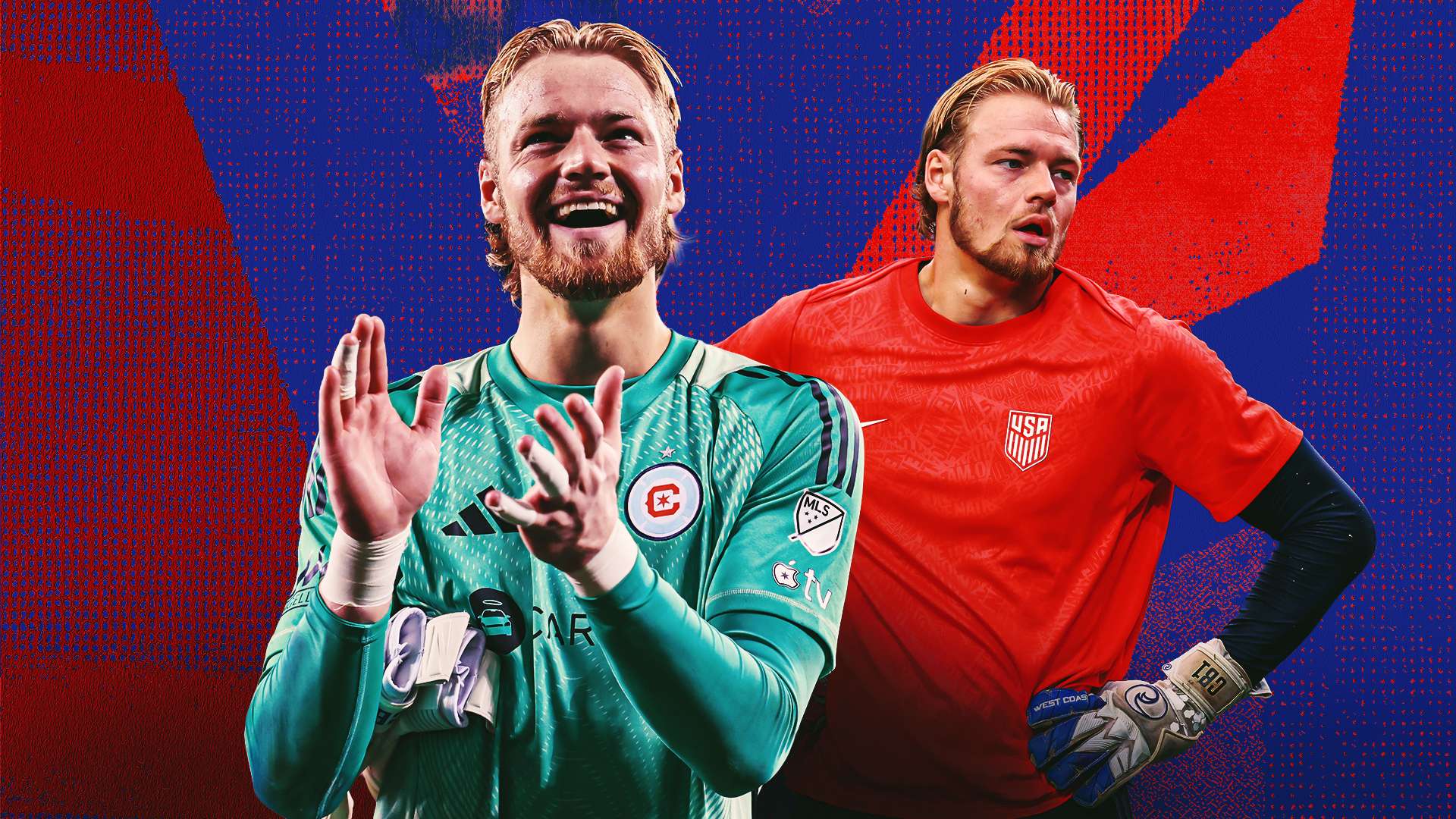
Chris Brady has navigated an unconventional path to World Cup contention. The 23-year-old Chicago Fire goalkeeper operates in two distinct spheres: a first-choice starter in Major League Soccer and a third-string competitor within the USMNT's goalkeeper hierarchy. Yet Brady refuses to view either role as a limitation, instead treating each assignment as an opportunity to demonstrate the intensity and preparation that have defined his professional trajectory.
Brady's rise from Chicago Fire academy prospect to international consideration reflects the sport's unforgiving arithmetic. Only one goalkeeper plays each match, but roster decisions rest on more than matchday performance. Coaching staff evaluate how reserves approach training, their leadership in moments without spotlight, and their readiness for scenarios that may never materialize. Brady has made himself indispensable in those quieter moments—the bus rides, locker room interactions, and pre-dawn sessions where competitive fire separates genuine contenders from peripheral figures. "Every goalkeeper, no matter how far down the depth chart, has to be ready to play," Brady explains, underscoring a philosophy that has defined his approach since joining the Fire's academy system.
From Academy Dreams to International Competition
Brady's trajectory began not with a singular breakthrough but through accumulated moments. Youth soccer transitioned to professional ambition once he entered the Fire's academy structure, where the abstract notion of "making it" became concrete and measurable. That progression—from recreational teammate to academy product to MLS regular—contains thousands of incremental decisions: training sessions approached with full commitment despite no guarantee of return, positioning studied in isolation, and a refusal to accept provisional status as permanent.
The pressure of potential World Cup inclusion carries weight Brady has not yet fully experienced. He acknowledges the stress of roster consideration for an event he has never participated in, aware that veterans speak of World Cup selection as transformative. "There's a little bit of stress and nerves attached to it," Brady admits, "because obviously the grandness and the severity of being included on a roster for a World Cup is something where I don't know the feeling of it." Yet that vulnerability coexists with the competitive edge that has powered his ascent within the Fire's system and into USMNT consideration.
Building Credibility Through Unseen Work
International soccer creates unusual dynamics for backup players. Brady's role with the USMNT demands excellence in preparation while accepting limited competitive opportunities. This paradox—excelling at a job that exists primarily to support others—requires psychological discipline rarely discussed in mainstream coverage. Brady's willingness to embrace this role, to bring full intensity to sessions where he may not play, has made him integral to the team's goalkeeper development despite his position on the depth chart.
What separates Brady's candidacy is his performance level with the Fire, where he has emerged as one of MLS's premier shot-stoppers. Club success provides the foundation for international consideration; USMNT scouts and coaches observe how goalkeepers perform under genuine competitive pressure. Brady's consistency in MLS—managing high-volume shot counts, commanding his area, and demonstrating technical proficiency—validates his place in the goalkeeper conversation regardless of his international appearance record. The next chapter of his story could unfold this summer, with World Cup selection representing validation not just of his ability but of his approach to professional soccer.